What Is Non-Invasive Body Contouring?
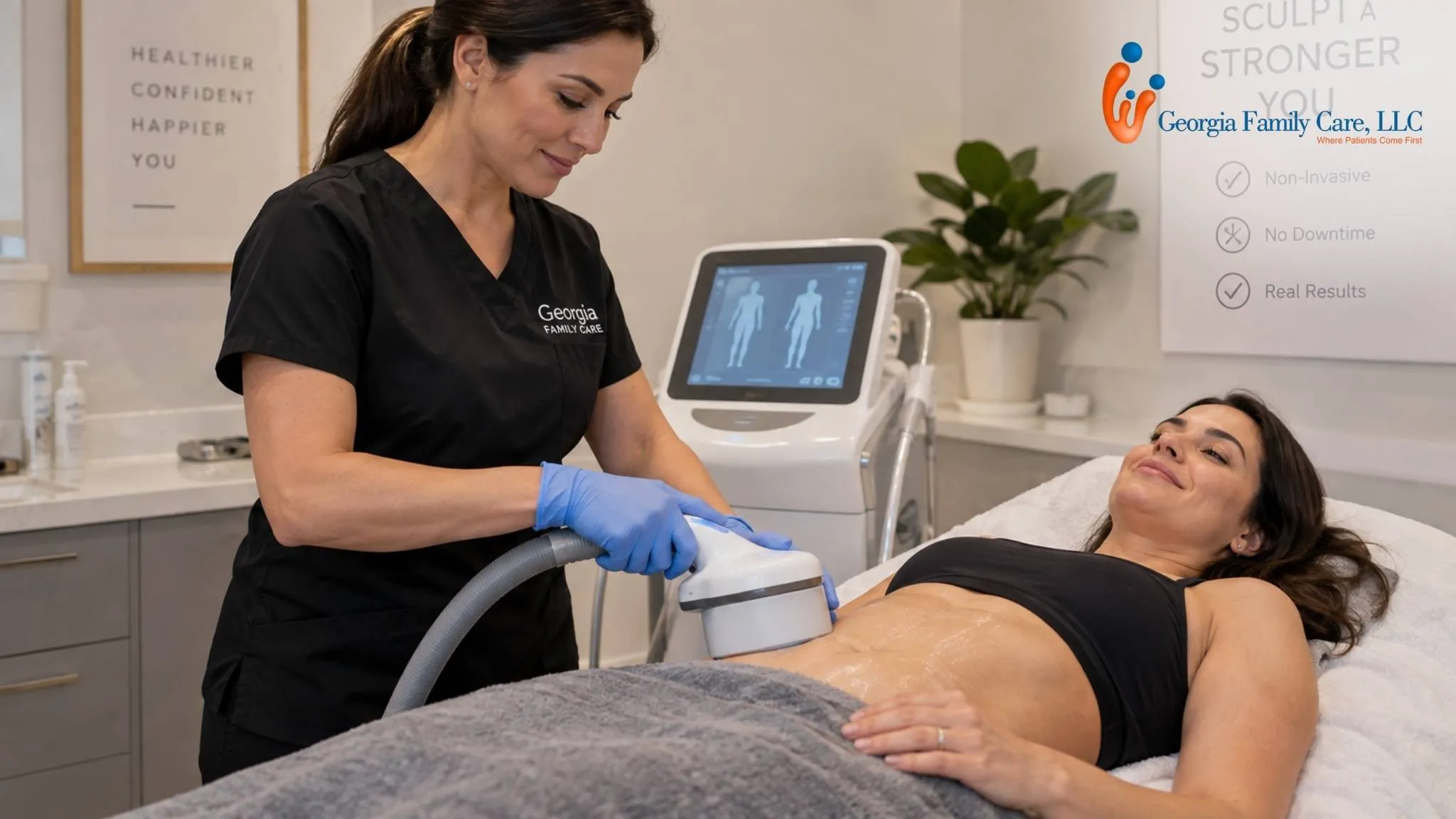
Non-invasive body contouring helps shape and smooth certain areas of the body without surgery. It does not use cuts or deep needles and usually requires little or no recovery time. Depending on the treatment, it may use cold, heat, or muscle stimulation. It works best for small, stubborn areas of fat or mild muscle concerns. It is not a weight loss treatment.
The Main Types of Non-Surgical Body Contouring
There are several types of non-surgical body contouring treatments. Cryolipolysis uses controlled cold to target fat cells, which the body slowly clears away. Radiofrequency (RF) uses heat to help tighten and smooth loose skin. HIFEM uses strong electromagnetic energy to make muscles contract and improve muscle tone. Your provider may recommend one treatment or a combination based on your goals and health.
Cryolipolysis (Fat Freezing)
Cryolipolysis uses controlled cold temperatures to target fat cells under the skin. The cold causes fat cells to break down slowly over several weeks. The body then removes these damaged cells through its normal, natural processes. Most people need more than one session to see a noticeable change, and results usually show up over one to three months. This method works best on soft, pinchable fat, such as fat around the abdomen, flanks, or thighs. It is not meant for firm fat that is deep inside the belly, since cold energy cannot reach that layer safely or effectively.Radiofrequency (RF) Skin Tightening
Radiofrequency treatments use heat energy to warm the deeper layers of the skin. This heat encourages the body to produce more collagen, which is the protein that keeps skin firm and smooth. RF is often used for mild skin looseness, especially after some fat loss or with the natural effects of aging. RF is not a fat-reduction treatment on its own. It is more about tightening and smoothing the skin’s surface so the results of other treatments look more polished.HIFEM (Muscle Toning Technology)
HIFEM stands for High-Intensity Focused Electromagnetic technology. This treatment sends energy into the muscle, causing it to contract many times faster and more intensely than it could during a normal workout. Over a series of sessions, this can help build muscle tone and definition, most often in the abdomen or glutes. HIFEM is a helpful add-on for people who already exercise but want extra muscle definition. It is not a substitute for regular physical activity, and it will not create muscle where there was none before. Many patients get the best results from a combination of these technologies for example, fat reduction paired with muscle toning. A physician-guided consultation is the best way to figure out which combination, if any, fits your body and your goals.Why Medical Supervision Matters for Body Contouring
What to Expect: Your First Body Contouring Visit
During your first visit, your provider will review your health history, medications, and past cosmetic treatments. You will discuss the areas you want to improve and your goals. The provider will then assess your skin, fat, and muscle tone. Based on this information, they will suggest a treatment plan, explain how many sessions you may need, and discuss the expected timeline and cost.
If you are new to body contouring, here is a simple breakdown of what usually happens during your first visit.
- Health review – Your provider will ask about your medical history, medications, and any past cosmetic treatments.
- Goal discussion – You will talk about which areas bother you most and what result you are hoping for.
- Body assessment – The provider will look at the area, check skin quality, and assess how much fat or muscle tone is present.
- Treatment plan – Based on your goals and health, your provider will recommend a treatment type, or a combination, along with how many sessions you may need.
- Honest pricing and timeline – You should leave your visit understanding the total cost, how many sessions are typical, and roughly when you might see results.
Most non-invasive treatments require little to no downtime. Many patients return to work or normal activities the same day. Results are gradual, not instant, since the body needs time to process and remove treated fat cells or build new collagen.
Common Myths About Non-Invasive Body Contouring
One common myth is that body contouring removes fat instantly. In reality, your body needs time to process treated fat cells. Another myth is that more sessions always give better results. Results also differ from person to person because skin quality, fat levels, muscle tone, and health can vary. Non-invasive does not mean risk-free, so proper medical guidance is important.
Because body contouring is heavily advertised, a lot of confusing or misleading claims circulate online. Let’s clear up a few of the most common ones.
Myth: Body contouring melts fat away instantly In reality, the body needs weeks to naturally clear treated fat cells through its lymphatic system. There is no treatment that removes fat the moment the session ends.
Myth: More sessions always mean better results Every treatment plan has a point where extra sessions stop adding meaningful benefit. A good provider will tell you when your plan is complete, rather than encouraging endless repeat visits.
Myth: Body contouring works the same for everyone Skin quality, fat thickness, muscle tone, and overall health all affect results. Two people with the same treatment can see different outcomes, which is why a personalized medical assessment matters more than a one-size-fits-all package.
Myth: If it’s non-invasive, it can’t have any risks Non-invasive simply means there is no surgery involved. It does not mean there is zero risk. Skin irritation, temporary numbness, and uneven results are all possible, which is another reason medical oversight is valuable.
Myth: Anyone can safely offer these treatments Many of these devices require training to use safely and effectively. A provider who understands anatomy, skin types, and medical history is far better equipped to use this technology responsibly than staff with little to no clinical background.
Life After Treatment: Aftercare and Maintenance
After body contouring, simple habits can support your results. Drink enough water and keep moving with light activities, such as walking. You may notice mild redness, swelling, or numbness, which usually improves within a few days. Follow your provider’s aftercare instructions and attend recommended sessions. A steady, healthy lifestyle can also help maintain your results over time.
Taking care of yourself after a body contouring session can support your results and help you feel your best while your body responds to treatment.
- Stay hydrated – Water supports the body’s natural process of clearing treated fat cells.
- Keep moving – Light activity, such as walking, may support circulation and the body’s natural recovery process.
- Watch the treated area – Mild redness, swelling, or numbness is common and usually fades within a few days. Contact your provider if anything feels unusual or does not improve.
- Maintain your results – Since body contouring does not prevent new fat cells from forming elsewhere, keeping a steady, healthy lifestyle helps protect your results over time.
- Follow your provider’s plan – If a series of sessions was recommended, sticking to the suggested schedule gives you the best chance of reaching your goal.
None of these steps are complicated, but they matter. Patients who follow simple aftercare guidance and stay in touch with their provider tend to feel more confident about their results and know exactly what to expect at each step.
Why Late Summer Is the Best Time to Start
How Georgia Family Care Approaches Body Contouring
Georgia Family Care has served families across Lithonia, Lawrenceville, and Conyers for years, and our approach to body contouring reflects that same whole-person philosophy. We do not treat body contouring as a stand-alone beauty transaction. Instead, we look at it as one part of your broader health and wellness picture.
For patients who are also working on weight management, our team can connect body contouring goals with our supervised weight loss clinic in Georgia programs, so your overall plan makes sense from every angle. For patients who are already at a healthy, stable weight and simply want to address one or two stubborn areas, body contouring alone may be the right fit.
Because we are a full medical practice, your provider already knows your health background, which means recommendations are personalized rather than generic. This is a meaningful difference from many storefront spas, where staff may not have medical training and cannot properly screen for safety concerns.
Practical Tips Before You Book
- Be honest about your health history and current medications during your consultation.
- Set realistic expectations body contouring shapes and smooths, it does not replace diet, exercise, or major weight loss.
- Ask how many sessions are typically needed for your specific goal area.
- Ask about aftercare, such as staying hydrated and staying active, which may support your results.
- Plan your timeline around any upcoming events, keeping in mind that results take weeks to appear.
Conclusion:
Non-invasive body contouring can be a helpful tool for smoothing and shaping specific areas of the body, but it works best when it is approached with honest expectations and real medical guidance. It is not a weight loss shortcut, and understanding that difference is the first step toward getting results you will actually be happy with. At Georgia Family Care, our team serves families across Lithonia, Lawrenceville, and Conyers with care built around your whole health picture, not just a single treatment. If you are ready to talk about your goals, book an appointment today and let our team help you build a plan that fits your body and your life.
Frequently Asked Questions:
1. What is non-invasive body contouring?
Non-invasive body contouring is a group of treatments that shape and smooth the body without surgery, cuts, or needles. These treatments use cold, heat, or muscle stimulation to target small areas of fat or improve muscle tone. It works best for stubborn spots that do not respond to diet and exercise. It is not designed for major weight loss, and results appear gradually as the body responds to treatment.
2. Is body contouring the same as weight loss?
3. Who is a good candidate for body contouring?
4. Does non-invasive body contouring hurt?
5. How many sessions will I need?
6. When will I see results from body contouring?
7. Why should I choose a medical clinic instead of a medspa for body contouring?
Author Bio:

DHARMESH KUMAR PATEL, M.D.
Dr. Patel is the founder of Georgia Family Care and has proudly served Dekalb and Gwinnett County for nearly 30+ years. He treats patients of all ages and focuses on full-body and mental wellness. He is known for his caring approach and helps manage conditions like diabetes, high blood pressure, and heart disease with a focus on education and prevention.
Related Blogs

Facial Treatment for Acne: Benefits, Process, and What to Expect at Georgia Family Care
Georgia Family Care facial treatment for acne featured image with a woman gently touching her skin, the clinic logo, blue and orange branding, and the headline “Facial Treatment for Acne: Benefits, Process, and What to Expect at Georgia Family Care,” with a Learn More CTA.

Hormonal Acne Vs Regular Breakouts: 5 Signs It’s Time to See a Doctor
Learn the signs of hormonal acne, including jawline breakouts, monthly flare-ups, and adult acne. See when it may be time to talk with a doctor.
How Many Body Contouring Sessions Do You Need?
Wondering how many body contouring sessions you’ll need to see results? Georgia Family Care explains what affects your treatment plan. Book today.