

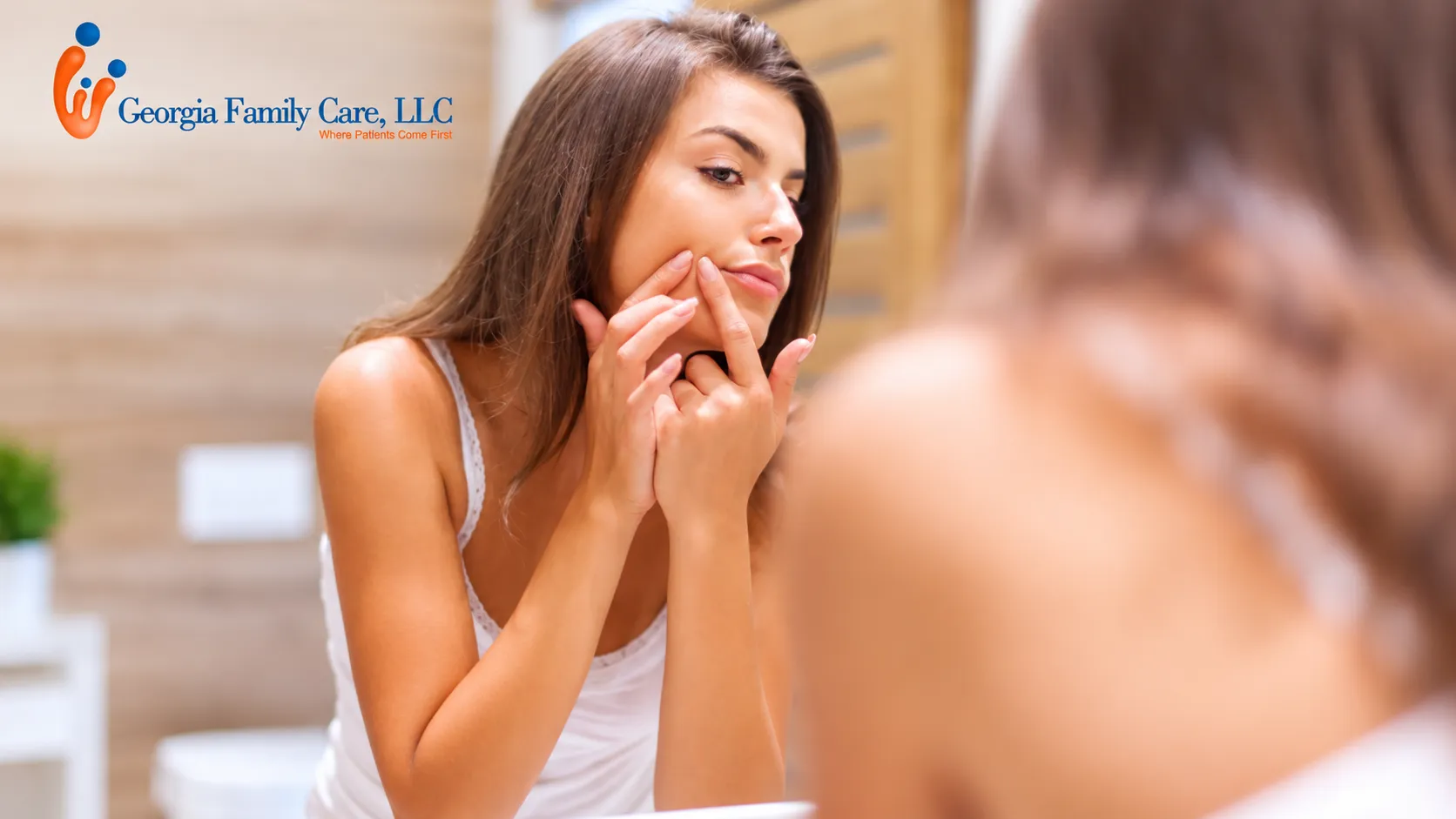
What Is Hormonal Acne?
Hormonal acne is acne that may be linked to changes in hormone levels. Hormones can affect how much oil your skin produces. Extra oil can mix with dead skin cells and block your pores, which may lead to breakouts.
Hormonal changes can happen during puberty, menstrual cycles, pregnancy, or other stages of life. Some adults may also notice new or worsening acne even if they did not have much acne as teenagers.
Hormonal acne may appear as:
- Pimples around the chin and jawline
- Red or swollen bumps
- Deep, painful breakouts
- Breakouts that return in the same areas
- Acne that follows a monthly pattern
However, not every breakout around the jawline is caused by hormones. Your skin type, skincare products, stress, medications, and other factors can also play a role. That is why looking at the full pattern is important.
5 Signs of Hormonal Acne You Should Know
1. Your Acne Keeps Coming Back Around Your Period
One of the common signs of hormonal acne is a pattern connected to your menstrual cycle. You may notice that your skin is clear for part of the month, followed by new breakouts before or during your period. These breakouts may happen again month after month. For some people, the pattern is easy to notice. For others, it may take a few months of tracking their skin to see the connection. Keeping a simple note of when your breakouts happen can be helpful when talking with your healthcare provider.
Ask yourself:
- Do breakouts appear around the same time each month?
- Do pimples become worse before your period?
- Do the same areas break out repeatedly?
If the answer is yes, hormones may be one factor worth discussing with a healthcare professional.
2. Breakouts Are Mostly Around Your Chin and Jawline
Where your acne appears can also provide a clue. Hormonal acne often affects the lower part of the face, especially the chin, jawline, and lower cheeks. You may notice deep or tender bumps that seem to appear under the skin. These breakouts can take longer to heal than small surface pimples.
That does not mean every chin or jawline breakout is hormonal. Things like makeup, skincare products, touching your face, or friction can also contribute to acne. But if you regularly get painful breakouts in these areas, it is worth discussing them with a healthcare provider.
3. You Started Getting Acne as an Adult
Acne is often associated with teenagers, but adults can get acne too. If you rarely had acne when you were younger but suddenly begin having frequent breakouts as an adult, it may be worth looking into what has changed. Hormonal changes can be one possible reason. Other factors may include:
- Stress
- Changes in skincare products
- Certain medications
- Changes in your menstrual cycle
- Lifestyle changes
- Other health factors
New adult acne does not automatically mean you have a hormone problem. A healthcare professional can look at your symptoms and health history to help determine possible causes.
4. Your Breakouts Are Deep, Painful, or Slow to Heal
Not all acne looks like a small whitehead or blackhead. Some people develop deeper bumps that feel sore or tender. These breakouts may take longer to go away and can leave behind dark spots or scars. If you frequently have deep, painful acne, trying product after product on your own may not be the best approach.
A professional evaluation can help identify your type of acne and determine what kind of care may be appropriate. At Georgia Family Care, acne care starts with understanding your skin, your breakouts, your lifestyle, and your health history. Treatment may include professional skincare services or other medical approaches based on your individual needs.
5. Your Acne Is Not Improving With Your Current Routine
- You have tried different cleansers.
- You have changed your moisturizer.
- You have bought acne products from the store.
But the breakouts keep coming back. If your acne continues despite a consistent skincare routine, it may be time to get professional guidance. Using too many acne products can sometimes irritate your skin and make it harder to know what is actually helping. Instead of constantly changing products, a healthcare professional can evaluate your skin and help you understand what may be contributing to your breakouts.
Hormonal Acne vs Regular Acne: What Is the Difference?
Hormonal and regular acne can look very similar, so it is not always possible to tell the difference just by looking at your skin. Here are some patterns that may help:
| Hormonal Acne | Other Types of Acne |
|---|---|
| May follow a monthly cycle | May not follow a regular pattern |
| Often affects the chin and jawline | Can appear anywhere on the face or body |
| May cause deep, tender bumps | May include blackheads, whiteheads, and small pimples |
| Can begin or worsen during adulthood | Can happen at many ages |
| May keep returning in the same areas | May be linked to clogged pores, products, or other triggers |
These are general patterns, not a way to diagnose yourself. Several things can contribute to acne, and more than one factor may be involved.
When Should You See a Doctor for Acne?
You do not have to wait until your acne becomes severe before asking for help. Consider talking with a healthcare professional if:
- Your acne keeps coming back
- Breakouts are painful or deep
- Acne is leaving dark spots or scars
- Your acne suddenly became worse
- You developed acne as an adult
- Breakouts seem connected to your menstrual cycle
- Your current skincare routine is not helping
- Acne is affecting your confidence or daily life
A professional visit can help you understand what may be happening instead of guessing.
What Happens During an Acne Consultation?
At Georgia Family Care, the first step is understanding your concerns. Your provider may ask about when your acne started, where you usually break out, how often it happens, your skincare routine, and other health information. Your skin can also be evaluated to understand the type and severity of your acne.
Based on your needs, your care plan may include medical acne treatment, professional skincare treatments, or a combination of approaches. Georgia Family Care’s current acne care information describes a process that includes a skin and health check, a personalized acne plan, possible in-office treatments, skincare guidance, and follow-up care.
The goal is to create a plan that fits your skin and your needs, rather than simply recommending the same routine to everyone.
Can Medspa Treatments Help With Acne?
Professional skincare treatments may be helpful for some acne concerns. Georgia Family Care’s Medspa offers skincare services such as acne clearance, chemical peels, microneedling, and other treatments designed for different skin concerns.
For example, professional acne-focused skincare may help address:
- Clogged pores
- Active breakouts
- Uneven skin texture
- Acne marks
- Acne scars
However, the right treatment depends on your skin and the type of acne you have. A consultation can help determine which options may be appropriate for you.
Conclusion:
Hormonal acne is not a sign that you are doing something wrong. Washing your face more often or buying another acne product is not always the answer. Your skin can change as your body changes, and the cause of acne can be different for each person. Instead of hiding your breakouts or trying endless products, consider getting professional advice if your acne keeps returning. Understanding the cause can be the first step toward better skin care.
If you are dealing with repeated jawline breakouts, monthly acne flare-ups, painful pimples, or new adult acne, Georgia Family Care can help you explore your options. Our team provides personalized healthcare for adults and families, along with medically supervised skincare and Medspa services.
You do not have to figure out your acne alone. Schedule a consultation with Georgia Family Care to discuss your skin concerns and learn about the care options that may be right for you.
Frequently Asked Questions:
1. Is hormonal acne only caused by hormones?
2. Where does hormonal acne usually appear?
3. Can adults get hormonal acne?
4. How can I tell if my acne is hormonal?
5. Should I see a doctor for recurring acne?
6. Can hormonal acne be treated?
7. Does Georgia Family Care offer acne treatment?
Author Bio:

DHARMESH KUMAR PATEL, M.D.
Dr. Patel is the founder of Georgia Family Care and has proudly served Dekalb and Gwinnett County for nearly 30+ years. He treats patients of all ages and focuses on full-body and mental wellness. He is known for his caring approach and helps manage conditions like diabetes, high blood pressure, and heart disease with a focus on education and prevention.
Related Blogs
Non-Invasive Body Contouring in Georgia: A Complete, Physician-Guided Guide
Thinking about non-invasive body contouring in Georgia? Learn how it works, who it’s for, and why medical supervision matters. Book today!
How Many Body Contouring Sessions Do You Need?
Wondering how many body contouring sessions you’ll need to see results? Georgia Family Care explains what affects your treatment plan. Book today.
CoolSculpting vs EMSculpt NEO: Which Body Contouring Treatment Fits Your Goals?
If you’re wondering, “Am I a candidate for body contouring?” you may be a good fit if you’re near your goal weight, maintain a healthy lifestyle, have stubborn localized fat, and want realistic, gradual results with minimal downtime.