


Understanding the Stages of the Flu: What Happens Day by Day
The flu doesn’t show up suddenly. It follows a pattern, and knowing these stages helps you understand what your body is going through.
Stage 1: Incubation Period (1-4 days before symptoms)
After being exposed to the flu virus, your body begins fighting it silently. During this time:
● You usually feel normal.
● You may still be contagious.
● The virus multiplies quickly inside your respiratory system.
Many people don’t realize they are spreading the flu before symptoms appear.
Stage 2: Sudden Onset of Symptoms (Day 1)
Unlike a cold, the flu hits fast. On the first day of symptoms, you may experience:
● Fever or chills
● Headache
● Muscle aches
● Extreme tiredness
● Sore throat
● Cough
Most people describe this stage as the moment they suddenly felt sick.
Stage 3: Peak Symptoms (Days 2-4)
This is the toughest part. During these days:
● Fever typically remains high
● Body aches are intense
● Cough becomes more persistent
● Appetite may decrease
● Sleeping becomes difficult
Adults and older children often feel exhausted and may spend most of the day resting.
Stage 4: Gradual Improvement (Days 5-7)
Your fever usually drops first. Energy slowly begins to return, and body aches reduce. However:
● The cough may still be strong
● Sinus symptoms may appear as inflammation settles
● Fatigue can continue for several days
While many symptoms improve this week, most people are not fully recovered yet.
Stage 5: Lingering Symptoms (1-3 weeks)
Even after the flu virus leaves your system, your body is still healing. During this stage you may still experience:
● A lingering cough
● Mild fatigue
● Slight chest tightness
This is normal and doesn’t always mean the flu is coming back.
Flu Season in Georgia: Why Symptoms Hit Harder During Peak Months
Flu season in Georgia follows a familiar pattern each year, influencing how quickly the virus spreads and how long symptoms may last. Flu activity usually begins to rise in late fall, around October and November, peaks during the colder months of December through February, and can sometimes linger until April. During these peak months, clinics and emergency rooms across the state see a noticeable increase in flu-related visits. Several factors contribute to the rapid spread of the flu in Georgia: cooler weather keeps people indoors, schools are in session, and holiday travel brings large groups together, creating ideal conditions for respiratory viruses. Local climate patterns also support faster transmission. Certain groups are at higher risk of experiencing severe or prolonged symptoms, including adults over 65, young children, pregnant individuals, people with asthma, COPD, or heart disease, and those with weakened immune systems. For these individuals, monitoring symptoms closely and seeking timely care is especially important during Georgia’s active flu season.
How Long Does the Flu Last? Symptom Duration for Adults & Children
Most healthy adults recover from the flu in 5-7 days, but some symptoms, especially the cough can last significantly longer. Children may experience longer symptoms because their immune systems are still developing.
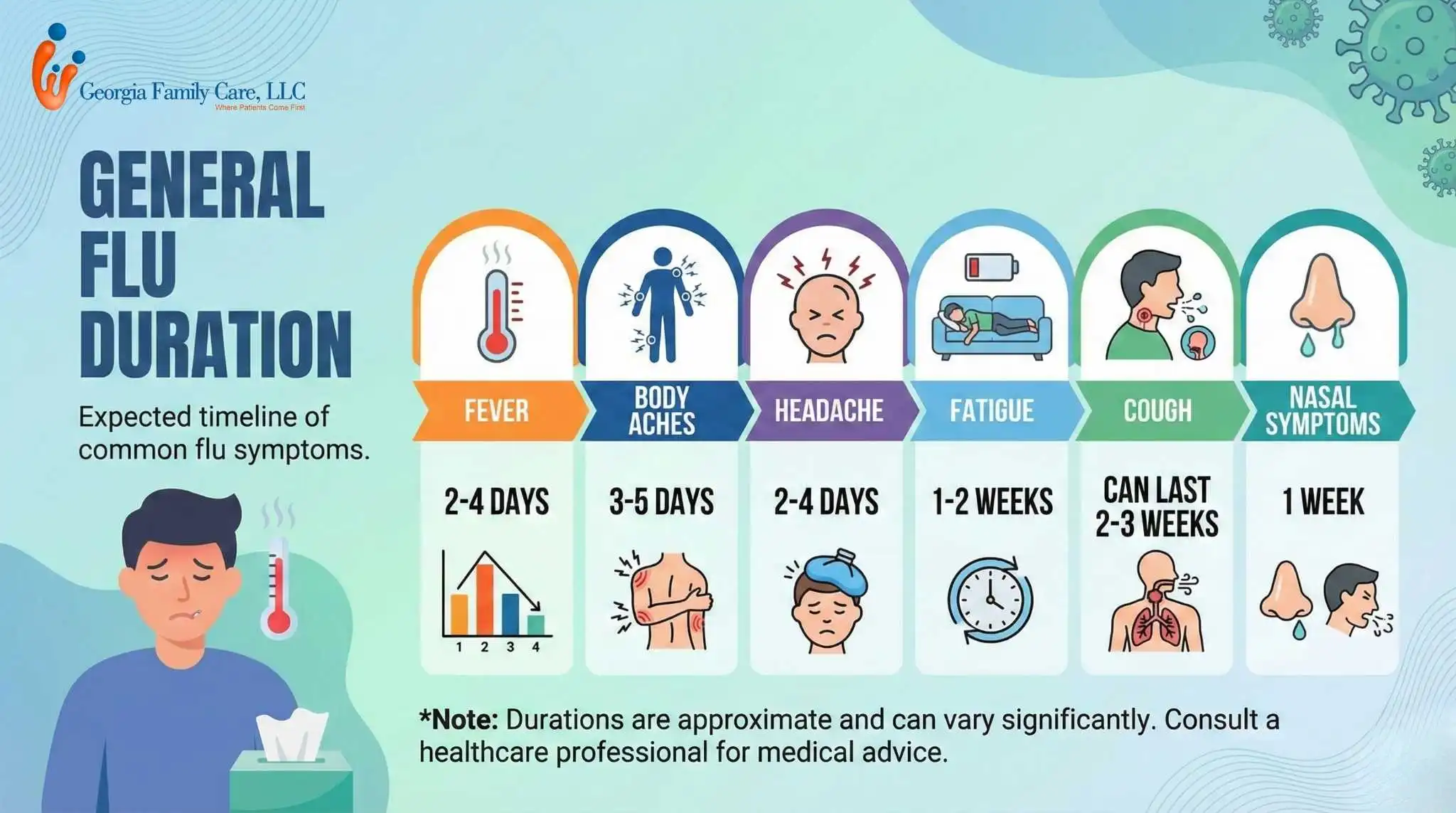
General flu duration
● Fever: 2-4 days
● Body aches: 3-5 days
● Headache: 2-4 days
● Fatigue: 1-2 weeks
● Cough: can last 2-3 weeks
● Nasal symptoms: 1 week
How long does the cough last after the flu?
A lingering cough after the flu is one of the most common concerns people experience. Even after your fever and body aches disappear, a flu-related cough can last 10-21 days. This happens because your airways remain inflamed, your body is still clearing leftover mucus, and your throat may be irritated from earlier congestion. In most cases, this type of cough is normal and slowly improves over time. However, you should seek medical attention if the cough lasts more than three weeks, becomes worse instead of better, produces green or bloody mucus, or causes difficulty breathing, as these may indicate complications like bronchitis or pneumonia.
How Long Does the Flu Shot Last in Adults? Protection & Immunity Explained
The flu shot doesn’t work immediately, and its protection changes over time.
How long does it take to start working?
After receiving the flu shot, it takes about 2 weeks for your body to develop full immunity. This is why getting vaccinated early in the season is ideal.
How long does protection last?
For most adults, flu shot protection lasts:
● 4-6 months at peak strength
● Gradually lowers after that as immunity fades
This is why the flu shot is updated and recommended annually.
Is it still effective late in the season?
Yes. Even if you get vaccinated in January or February, the flu shot still:
● Reduces symptom severity
● Lowers the risk of hospitalization
● Protects against late-season flu waves
Why immunity fades over time
The flu virus changes every year. New strains appear, and the vaccine is updated to match the most common ones. This natural shift makes annual vaccination necessary.
When to Seek Medical Care in Georgia:
While most people recover from the flu at home, certain symptoms call for immediate medical attention especially during Georgia’s busy flu season. You should seek care right away if you experience trouble breathing, chest pain, persistent high fever, severe dizziness, symptoms that last longer than expected, or if your condition improves and then suddenly worsens. Thick, green, or bloody mucus is also a sign that you need medical evaluation. Children may require earlier care if they are unusually sleepy, refuse food or fluids, show signs of dehydration, or cry without tears. Flu testing can confirm the illness, detect other infections, and guide treatment, and antiviral medications work best when taken within the first 48 hours of symptoms. At home, rest, hydration, warm showers, humidifiers, and light, nutrient-rich meals can support recovery. To prevent spreading the flu within your household, wash hands often, wear a mask when coughing, clean frequently touched surfaces, and avoid sharing utensils or drinks. These simple precautions help protect your family and support a smoother recovery.
Conclusion:
Recovering from the flu can take anywhere from a few days to a few weeks, depending on your symptoms, overall health, and how early you start treatment. Understanding the stages of the flu, how long the cough may last, the timing of Georgia’s flu season, and the duration of flu shot protection helps you stay prepared and make informed decisions. If you or your family are experiencing severe symptoms, a lingering cough, or a delayed recovery, Georgia Family Care, Locations in Lawrenceville, Lithonia & Conyers is here to support you with prompt evaluation, accurate testing, and personalized treatment to help you feel better faster. Staying informed and knowing when to seek help is the best way to stay healthy during Georgia’s flu season.
Frequently Asked Question:
1. How long does the flu usually last for Georgia residents?
For most healthy adults in Georgia, the flu lasts about 5-7 days, though fatigue and cough can continue for 2-3 weeks. Symptoms may last longer for children, seniors, or those with health conditions. Early care and rest support a smoother recovery.
2. Why is flu season in Georgia worse during the winter months?
Flu season in Georgia peaks from December to February because cooler weather keeps people indoors, schools are active, and holiday travel increases exposure. These conditions make the flu spread quickly across communities statewide.
3. How long does the cough last after the flu?
A flu-related cough can linger for 10-21 days as your airways heal and your body clears leftover mucus. This is common for Georgia residents, but seek care if the cough lasts over three weeks or worsens.
4. How long does the flu shot last for adults in Georgia?
The flu shot provides strong protection for 4-6 months. Immunity gradually decreases afterward, which is why annual vaccination is recommended. It still helps reduce severe symptoms during Georgia’s flu season.
5. When should I see a doctor for flu symptoms in Georgia?
Seek medical care if you have trouble breathing, chest pain, persistent fever, severe dizziness, or symptoms that worsen after improving. Children showing dehydration or unusual sleepiness should also be evaluated promptly.
6. Are certain groups in Georgia more at risk for severe flu symptoms?
Yes. Adults over 65, young children, pregnant individuals, and residents with asthma, COPD, heart disease, or weakened immunity face higher risks. These groups often experience longer or more intense symptoms during Georgia’s flu season.
7. Does the flu spread quickly in Georgia households?
Yes. Close indoor contact makes flu transmission common in Georgia homes. Washing hands, using masks when coughing, disinfecting surfaces, and avoiding shared utensils can reduce spread, especially during peak flu months.
Author Bio:

DHARMESH KUMAR PATEL, M.D.
Dr. Patel is the founder of Georgia Family Care and has proudly served Dekalb and Gwinnett County for nearly 30+ years. He treats patients of all ages and focuses on full-body and mental wellness. He is known for his caring approach and helps manage conditions like diabetes, high blood pressure, and heart disease with a focus on education and prevention.
Recent Posts

Facial Treatment for Acne: Benefits, Process, and What to Expect at Georgia Family Care
Georgia Family Care facial treatment for acne featured image with a woman gently touching her skin, the clinic logo, blue and orange branding, and the headline “Facial Treatment for Acne: Benefits, Process, and What to Expect at Georgia Family Care,” with a Learn More CTA.

Hormonal Acne Vs Regular Breakouts: 5 Signs It’s Time to See a Doctor
Learn the signs of hormonal acne, including jawline breakouts, monthly flare-ups, and adult acne. See when it may be time to talk with a doctor.

Non-Invasive Body Contouring in Georgia: A Complete, Physician-Guided Guide
Thinking about non-invasive body contouring in Georgia? Learn how it works, who it’s for, and why medical supervision matters. Book today!