

What Is Colon Cancer?
Colon cancer, also known as colorectal cancer, begins in the large intestine when abnormal cells start to grow uncontrollably. Most cases start as small, non-cancerous polyps, which may gradually turn into cancer over several years. Although colon cancer often develops silently, without noticeable symptoms in its early stages, it becomes more dangerous once it spreads beyond the colon. Common symptoms such as changes in bowel habits, abdominal discomfort, blood in stool, or unexplained weight loss usually appear only in the later stages, making proactive screening essential. Anyone can develop colon cancer, but certain factors increase risk. Age is one of the biggest contributors, especially after 45. Family history, genetics, obesity, smoking, low-fiber diets, and a sedentary lifestyle can also elevate risk levels. Because early colon cancer rarely produces symptoms, screening plays a critical role in detecting issues before they become life-threatening. Regular screening tests can identify polyps, detect hidden signs of cancer, and allow timely medical intervention. This is why healthcare guidelines recommend early and routine colon cancer screening for adults, even those who feel healthy. Understanding the disease helps individuals make informed decisions about choosing the right screening method.
What Are the Types of Colon Cancer Screening?
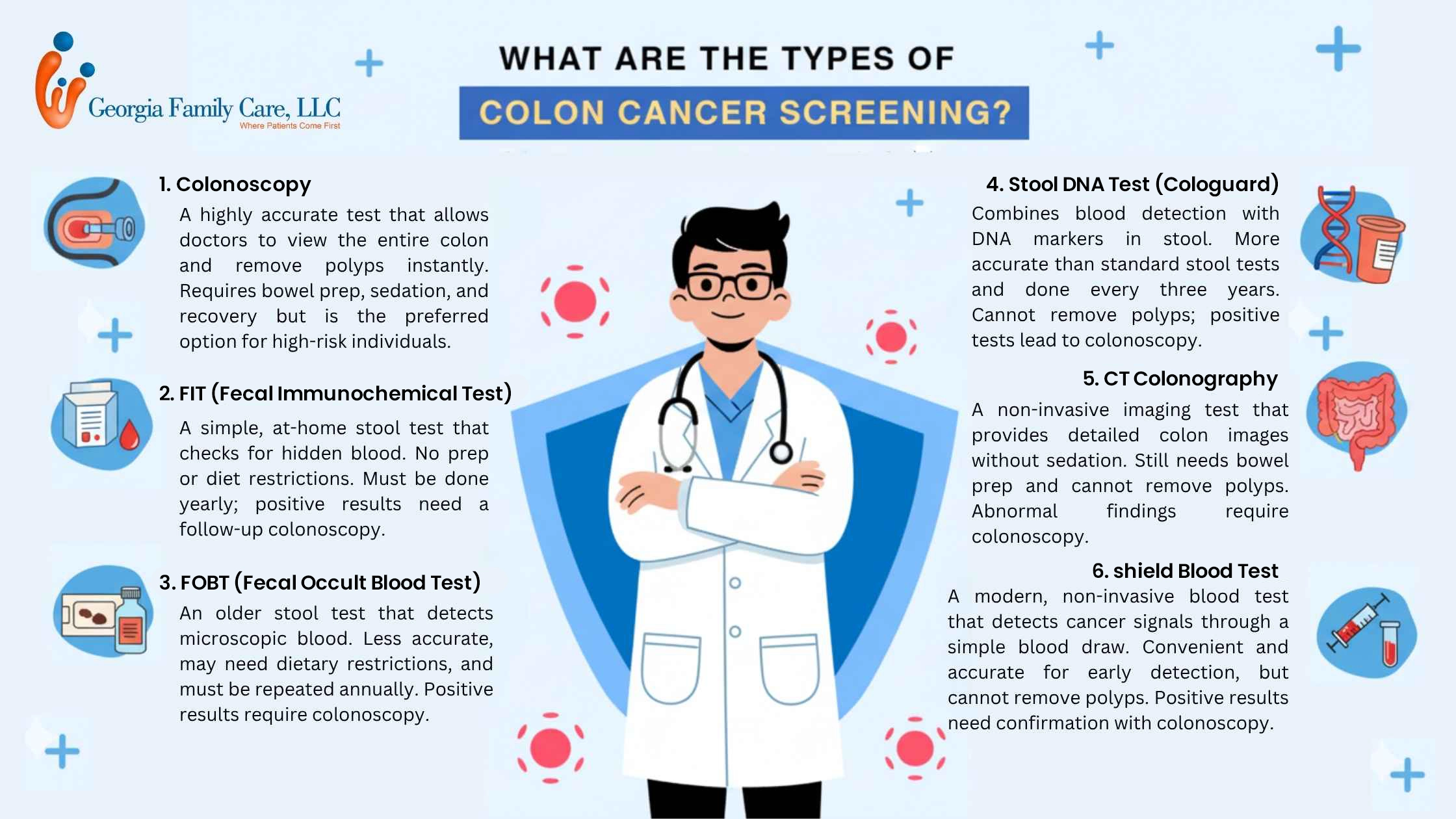
Colon cancer screening includes a range of tests designed to detect precancerous polyps or early signs of cancer. These tests vary in method, accuracy, preparation requirements, and comfort level. Traditional options like colonoscopy offer direct visualization of the colon, while stool-based tests detect hidden blood or abnormal DNA shed by cancer cells. Imaging techniques like CT colonography provide a non-invasive look inside the colon. Recently, modern innovations such as the Shield blood test have introduced a simpler approach by using a standard blood draw to detect cancer-associated signals. Each screening option has its own advantages, making it important for patients to understand the differences and choose the test that suits their preferences and risk profile.
1. Colonoscopy
A colonoscopy is considered the gold standard for colon cancer screening because it allows doctors to directly view the entire colon and remove polyps during the same procedure. The process involves inserting a flexible tube with a camera into the colon. Although highly accurate, it requires bowel preparation, sedation, and recovery time. Despite being invasive, colonoscopy offers the unique benefit of detecting and treating abnormalities immediately, which is why it remains the preferred option for individuals with higher risk or those who have symptoms.
2. FIT (Fecal Immunochemical Test)
The FIT test is a simple, non-invasive stool-based screening option that detects hidden blood in the stool, which can be a sign of polyps or colon cancer. It does not require dietary restrictions or bowel preparation, making it easy for individuals to complete at home. FIT is typically recommended once a year due to its lower sensitivity compared to colonoscopy. While effective for detecting blood, it may not identify polyps that are not bleeding. Positive FIT results usually require follow-up with a colonoscopy for further evaluation.
3. FOBT (Fecal Occult Blood Test)
The FOBT is one of the oldest stool-based tests used to detect microscopic blood in the stool. Although helpful, it is less accurate than newer options like FIT and may require dietary restrictions before sample collection. The test needs to be performed annually for consistent monitoring. Like FIT, FOBT cannot identify polyps that are not actively bleeding, and false positives may occur. If results come back positive, a diagnostic colonoscopy is necessary to confirm the cause.
4. Stool DNA Test (Cologuard)
The stool DNA test, commonly known as Cologuard, combines FIT with DNA analysis to detect genetic markers and blood associated with colon cancer. It offers better accuracy than standard stool tests and can be done comfortably at home. However, it may still produce false positives and is generally recommended every three years. While convenient, the test cannot remove polyps or provide a direct view of the colon, so a positive result must be followed by a colonoscopy.
5. CT Colonography
CT colonography, or virtual colonoscopy, uses advanced imaging technology to create detailed pictures of the colon and rectum. It is less invasive than a traditional colonoscopy and does not require sedation, allowing patients to resume normal activities quickly. However, bowel preparation is still needed, and the test cannot remove polyps. If abnormalities are found, a standard colonoscopy is required for further evaluation. This method is often chosen by individuals seeking a less invasive yet effective screening option.
6. Shield Blood Test (Blood-Based Screening)
The Shield blood test is a modern, non-invasive colon cancer screening option that requires only a simple blood draw. It detects cancer-associated signals circulating in the bloodstream, making it comfortable and easy for patients who prefer to avoid stool tests or colonoscopy preparation. The test offers strong accuracy for early detection and is convenient for routine health checkups. While it cannot remove polyps, its simplicity increases screening compliance. A positive result would still require follow-up with a colonoscopy.
How Georgia Family Care Helps:
We committed to making colon cancer screening accessible, comfortable, and stress-free for every patient. We understand that many people delay screening due to fear, inconvenience, or lack of awareness. Our healthcare team provides personalized guidance to help you understand each screening method and choose the one that best matches your comfort level, health history, and risk factors. We aim to simplify the entire process with easy scheduling, minimal waiting times, and a supportive clinical environment. For patients who prefer non-invasive screening, our Shield blood test option provides a quick and painless alternative without the need for bowel prep or stool samples. If any test result indicates risk, our team assists you with the next steps, ensuring timely follow-up and proper care. At GA Family Care, preventive health is our priority, and we focus on early detection to protect long-term wellness. We are here to guide you throughout your screening journey with compassionate care and professional expertise.
Benefits of Using the Shield Blood Test for Colon Cancer Screening
● Completely non-invasive and requires no bowel preparation
● Quick and comfortable only a routine blood draw
● Ideal for individuals who avoid stool-based tests
● Encourages more people to undergo regular screening
● Highly convenient for busy patients
● Detects cancer-associated signals at early stages
● No dietary or activity restrictions
● Suitable for annual preventive health checkups
● Helps increase screening compliance and early diagnosis rates
Conclusion:
Colon cancer screening saves lives, and choosing the right test is key to early detection. Individuals can pick what best fits their comfort and healthcare needs. The non-invasive Shield blood test offers a simple, preparation-free choice that encourages timely screening. What matters most is getting screened regularly to improve outcomes and reduce risks. At Georgia Family Care, with locations in Lawrenceville, Lithonia, and Conyers, we provide modern, patient-friendly screening solutions. Take a step toward better health schedule your colon cancer screening today.
Frequently Asked Question:
1. What is the purpose of colon cancer screening?
Colon cancer screening helps detect early changes in the colon before symptoms appear. Many cases begin as small polyps that can turn cancerous over time. Screening identifies these abnormalities early, when treatment is most effective. Regular screening significantly reduces complications, improves survival rates, and helps detect cancer at its earliest, most treatable stage.
2. What is the Shield blood test for colon cancer?
The Shield blood test is a non-invasive screening option that uses a simple blood draw to detect cancer-associated signals in the bloodstream. It requires no bowel prep, no stool sample, and no dietary restrictions, making it a comfortable alternative for many patients. While highly convenient, any positive result must be followed up with a colonoscopy for confirmation.
3. How do stool-based tests like FIT and FOBT work?
FIT and FOBT are at-home stool tests that look for hidden blood, which may indicate polyps or colon cancer. They are simple and require no bowel prep. However, they may miss polyps that aren’t bleeding and can produce false positives. These tests are usually done annually, and any abnormal result requires follow-up with a colonoscopy.
4. Is colonoscopy still the best screening method?
Regular movement during Thanksgiving helps manage stress, support digestion, and maintain energy. Activities like walking the BeltLine, playing outdoor games, or joining the Thanksgiving Day run keep your metabolism active. Even a short family stroll after dinner can improve heart health and prevent the sluggish feeling that follows large meals.
5. What makes the Shield blood test different from stool tests?
The Shield blood test detects cancer-related signals from a blood sample, while stool tests check for hidden blood or DNA changes in stool. Shield offers a simpler, more comfortable experience with no sample handling or prep. Its convenience increases screening participation, but like other non-invasive tests, abnormal results still require a follow-up colonoscopy.
6. Who should consider colon cancer screening?
Screening is recommended for adults starting at age 45 or earlier for those with risk factors such as family history, genetics, obesity, smoking, or long-term unhealthy lifestyle habits. Even individuals with no symptoms should get screened, as colon cancer often develops silently. Choosing the right test depends on personal risk, comfort, and doctor recommendations.
7. How does Georgia Family Care support colon cancer screening?
Georgia Family Care offers multiple screening options, including the Shield blood test, to make early detection simple and stress-free. The clinic provides personalized guidance, easy appointments, and follow-up support for any abnormal results. With locations in Lawrenceville, Lithonia, and Conyers, patients can access convenient, modern screening tailored to their needs.
Author Bio:

DHARMESH KUMAR PATEL, M.D.
Dr. Patel is the founder of Georgia Family Care and has proudly served Dekalb and Gwinnett County for nearly 30+ years. He treats patients of all ages and focuses on full-body and mental wellness. He is known for his caring approach and helps manage conditions like diabetes, high blood pressure, and heart disease with a focus on education and prevention.
Recent Posts

Stay Healthy and Enjoy Atlanta Holiday Events This Christmas
Atlanta Christmas activities bring people together, encourage movement, and lift spirits during...

How Long Does the Flu Last? A Complete Recovery Guide for Georgia Residents
The flu doesn’t show up suddenly. It follows a pattern, and knowing these stages helps you...

How Atlanta Families Can Stay Safe During Cold Waves and Winter Storms
Winter weather alerts can be confusing especially in a region like metro Atlanta where cold...