
Understanding Atlanta’s Winter Storm Warnings
Winter weather alerts can be confusing especially in a region like metro Atlanta where cold conditions are inconsistent. Knowing what each alert means can help you take the right steps at the right time.
Winter Weather Advisory
This indicates that minor snow, ice, or freezing rain is expected. Travel might become difficult, and temperatures can drop enough to impact health, especially for seniors and infants. While not as severe as a warning, families should stay cautious and avoid unnecessary travel.
Winter Storm Watch
A winter storm may develop, but timing and intensity are uncertain. This is your cue to review emergency supplies, charge devices, refill medications, and prepare for possible disruptions.
Winter Storm Warning
A winter storm is expected or already happening. Heavy snow, icy roads, sleet, freezing rain, and dangerous wind chills are likely. This is when Atlanta roads become extremely hazardous. Schools, offices, and public services may shut down. Families should remain indoors, monitor weather updates, and follow safety instructions.
Freeze Warning / Hard Freeze Warning
Temperatures are expected to fall below freezing for several hours. This can damage pipes, affect home heating systems, and increase health risks such as frostnip, frostbite, asthma flare-ups, or breathing difficulties.
Wind Chill Advisory / Warning
Cold air and wind combine to make the temperature feel significantly colder. Even short outdoor exposure can be risky. Children waiting at bus stops, outdoor workers, and people with poor circulation are especially vulnerable.
For real-time updates, Atlanta residents can follow NOAA, The Weather Channel, or the National Weather Service Atlanta office. During active winter events, staying informed can prevent accidents and protect your family’s health.
How Cold Weather Impacts Your Health
Cold weather can affect your body in several ways, especially in Atlanta where people are not used to extreme winter conditions. Even a short time in the cold can cause health problems. One major risk is hypothermia, which happens when your body loses heat faster than it can produce it. This causes your temperature to drop, leading to shivering, confusion, slow breathing, and tiredness. Frostbite is another danger, where the skin and tissues freeze, usually on the fingers, toes, ears, and nose. It can occur even when the temperature is slightly above freezing if the wind is strong. Cold air can also trigger breathing problems. People with asthma, COPD, bronchitis, or allergies may notice more coughing, wheezing, or chest tightness during cold waves. Winter also increases the spread of flu, RSV, sore throat, and the common cold because people spend more time indoors. Heart strain is another concern, as blood vessels tighten in cold temperatures, which raises blood pressure and puts extra stress on the heart especially for people with diabetes or hypertension. Another common winter risk is slipping on icy driveways or walkways, leading to injuries, particularly among older adults. Understanding these risks helps you take the right steps to stay safe and healthy during cold weather.
Essential Safety Tips for Atlanta Families During Winter Storms
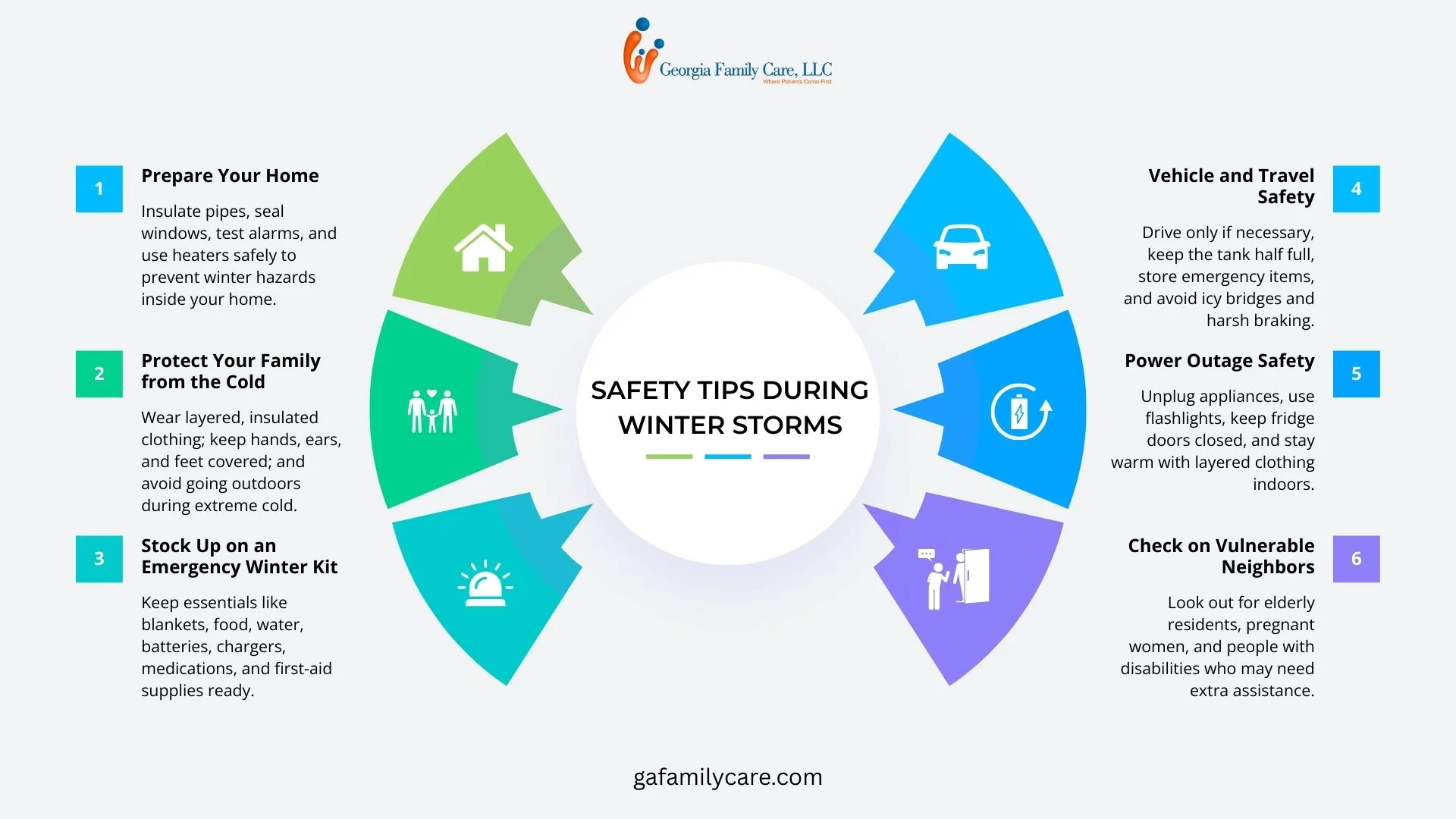
Atlanta’s winter storms are unpredictable, so the best protection is preparation. Here’s what families can do to stay safe before, during, and after a cold wave or storm.
1. Prepare Your Home
● Insulate pipes to prevent bursts.
● Keep faucets dripping on freezing nights.
● Seal windows and gaps to retain warm air.
● Test smoke detectors and carbon monoxide alarms.
● Use heaters safely and avoid placing them near curtains, bedding, or furniture.
Never use grills, ovens, or generators inside your home for heat.
2. Protect Your Family from the Cold
● Dress in multiple warm layers.
● Cover hands, feet, ears, and face.
● Use waterproof jackets and insulated boots on icy days.
● Avoid going outdoors during warning hours unless necessary.
For young children: double-check that hands and faces are fully covered before stepping outside.
3. Stock Up on an Emergency Winter Kit
Keep these essentials ready:
● Thermal blankets and warm clothing
● Bottled water and non-perishable food
● Flashlights, batteries, candles
● Portable phone chargers
● Prescription medications and inhalers
● First-aid supplies
● Baby formula, diapers, and wipes (if needed)
4. Vehicle and Travel Safety
If travel cannot be avoided:
● Keep your gas tank at least half full.
● Store emergency supplies like blankets, a flashlight, and jumper cables.
● Drive slowly and avoid bridges and overpasses. They freeze first.
● Never brake harshly on icy roads.
Atlanta roads become dangerous quickly during ice events; avoiding travel is the best choice.
5. Power Outage Safety
In case of a blackout:
● Unplug appliances to prevent surges.
● Use flashlights instead of candles when possible.
● Keep refrigerator doors closed to preserve food.
● Dress in layers to maintain body heat indoors.
6. Check on Vulnerable Neighbors
Elderly neighbors, pregnant women, and people with disabilities may need extra support during storms. A quick check-in can make a life-saving difference.
How Georgia Family Care Can Help You:
At GA Family Care, we provide complete support to help Atlanta families stay healthy and safe during the winter season. Cold weather can trigger breathing problems, so we offer expert care for asthma, COPD, allergies, and other respiratory flare-ups. Our clinic provides same-day appointments for flu, RSV, sore throat, fever, and other common winter illnesses, making it easier for your family to get fast medical help when symptoms appear. We also focus on blood pressure and diabetes monitoring, which is especially important during cold waves when the body is under extra stress. For cold-related issues like hypothermia, frostnip, or numbness, our team is ready to provide immediate evaluation and treatment. Winter storms can increase the risk of slips, falls, sprains, and minor injuries, and our urgent care services ensure you get quick and effective care. We also offer seasonal vaccinations, including flu shots, to keep your family protected from infections. When travel is unsafe during severe weather, we make healthcare more accessible through telehealth visits, allowing you to speak with a doctor from the comfort of your home. Our goal is to give you dependable, friendly, and family-centered care throughout the winter months.
Conclusion:
Cold waves and winter storms may be unpredictable in Atlanta, but with the right preparation, your family can stay safe, warm, and healthy all season long. Understanding winter weather warnings, recognizing health risks, and following simple safety steps can significantly reduce the dangers associated with extreme cold. At GA Family Care, we are committed to protecting the health of every Atlanta family especially during challenging weather conditions. Whether you need help managing respiratory issues, treating seasonal illnesses, or getting quick medical support during the winter months, our clinic is here to support you with compassionate, reliable care. Stay prepared. Stay informed. And remember GA Family Care is always here to help when your family needs it most.
Frequently Asked Question:
1. What should Atlanta families do when a winter storm warning is issued?
When a winter storm warning is issued, Atlanta families should stay indoors, avoid travel, prepare emergency supplies, and monitor weather alerts. Ensure heaters are used safely, charge devices, keep medications ready, and dress warmly in layers. Staying informed and reducing outdoor exposure can prevent accidents and cold-related health problems.
2. How can cold weather affect your health during winter storms?
Cold weather can cause hypothermia, frostbite, asthma flare-ups, and breathing issues. It also increases the spread of flu, RSV, and common colds as people stay indoors. Blood pressure can rise due to cold-induced vessel tightening. Older adults, children, and those with chronic conditions face higher risks during extreme winter conditions.
3. What items should be included in an emergency winter kit?
An emergency winter kit should include thermal blankets, warm clothes, flashlights, batteries, non-perishable food, bottled water, first-aid supplies, prescription medications, inhalers, and phone chargers. Families with infants should add formula, diapers, and wipes. These essentials help you stay safe during power outages or travel disruptions.
4. How can families protect themselves from extreme cold?
Families should dress in layered clothing, cover hands, feet, ears, and face, and use insulated jackets and waterproof boots. Limit outdoor activity during warnings, especially for children and older adults. Keep homes warm, close drafts, and use heaters safely. Staying indoors and avoiding exposed skin helps prevent frostbite and hypothermia.
5. What safety steps should you follow during a power outage in winter?
During winter power outages, unplug appliances to avoid surges, rely on flashlights instead of candles, and keep refrigerator doors closed. Dress in layers to maintain body heat, and avoid indoor use of grills or generators. Prepare blankets, warm drinks, and emergency supplies until power is restored to stay safe.
6. How does GA Family Care support patients during cold waves and winter storms?
GA Family Care supports families with same-day care for flu, RSV, sore throat, and winter illnesses. We treat asthma flare-ups, respiratory issues, frostnip, and minor injuries from slips. Our clinic provides blood pressure and diabetes monitoring, flu shots, and telehealth visits during severe weather to ensure safe access to care.
7: When should someone seek medical help during extreme winter weather?
Seek medical help if you experience breathing difficulty, chest tightness, severe cough, numbness, frostbite symptoms, or signs of hypothermia like confusion or slow breathing. People with diabetes, heart issues, or asthma should be extra cautious. Quick medical evaluation helps prevent complications during harsh winter conditions.
Author Bio:

DHARMESH KUMAR PATEL, M.D.
Dr. Patel is the founder of Georgia Family Care and has proudly served Dekalb and Gwinnett County for nearly 30+ years. He treats patients of all ages and focuses on full-body and mental wellness. He is known for his caring approach and helps manage conditions like diabetes, high blood pressure, and heart disease with a focus on education and prevention.
Recent Posts

How Stress Affects Mental Health and Simple Ways to Manage It
Stress is your body’s natural reaction to challenges or demands. It triggers the “fight or flight”...

How Semaglutide Supports Women’s Healthy Weight Loss
Weight loss often looks different for women compared to men. Shifts in estrogen, progesterone, and...
Why Semaglutide Works Better with Healthy Lifestyle Changes
Semaglutide works by slowing digestion and reducing appetite, which makes it easier to eat less...